
Sabrina Ortiz
Sabrina Ortiz is a Senior Reporter at The Deep View. Previously, Sabrina led AI coverage at ZDNET. Sabrina graduated with an M.A. in Journalism, Business and Economics Reporting from the Craig Newmark Graduate School of Journalism at CUNY and a B.A. in Media and Journalism and Political Science from the University of North Carolina at Chapel Hill.
Articles

How Apple made every new device part of its AI plan
The iPhone Duo may have taken the spotlight, with Apple positioning it as the device built for AI, but every other product on stage at its September 9 event told the same story.
The Apple Watch Series 12 and Apple Watch Ultra 4 exemplify the company's focus on building devices for the AI era. Both watches sport the new S11 chip, which unlocks deeper AI capabilities, including a brand-new suite called Audio Intelligence. The Siri Recap feature, part of the suite, helps position the watch as an AI wearable, without the company even needing to call it that.
Siri Recap provides users with high-level summaries from conversations recorded on the watch while the feature is activated, much like the AI note-taking app Granola, which has become massively popular and recently hit a $1.5 billion valuation. Users can turn Siri Recap on or off at any time from the Control Center, and, when on, these insights are then populated in the new Siri app. This is not a traditional transcript with timestamps, speaker attributions, or even quotes, so it is less of a voice memo replacement but, more so, a way to keep track of conversation highlights.
The Live Rewind feature works a bit differently, always listening, and when activated, giving users a 15-second transcript of the conversation that just happened. When activated, it plays an audible chime and has a full-display animation of a microphone so that people know the feature was activated. Predicting the hesitation of having AI listen to all your conversations, Apple clarified that the audio of the conversations is not recorded and the summaries and text snippets are end-to-end encrypted in the Siri app with iCloud syncing. Both features will arrive in beta later this year. Other AI Apple Watch Audible Intelligence features include:
- Sound recognition on Apple Watch: alerts users who are deaf or hard of hearing of important sounds
- Shazam on Apple Watch: now instantly detects the music playing around you and automatically displays the song title and artist's name on the Music Recognition widget in Smart Stack
Of course, all of the products, including the watches, AirPods 5, iPhone Duo, iPhone 18 Pro and iPhone 18 Pro Max will be able to take advantage of the new Siri AI overhaul, which The Deep View documented during WWDC in June, including a personal context that deeply informs your AI answers and more seamless conversational interactions with Siri that will allow for better assistance and dictation improvements. To support these features, the new phone lineup also got an Apple silicon upgrade with the new A20 Pro chip.
Our Deeper View
Apple is playing the long game with AI features, not necessarily marketing anything as an "AI device," but baking in features that will make a difference in users' everyday lives. It supports this with powerful chipsets that enable the features already announced at WWDC as part of iOS 27 and the other new OS-es, while also future-proofing the devices for future integrations. In the AI wearable realm, Apple may not have released AirPods with cameras, but the new Apple Watch lineup helps fill that void, since it's something people wear every day and now unlocks AI features exclusive to that device. Apple is also doing this in a distinctly Apple way, prioritizing user privacy. While it would have been easy for the Apple Watch to do what other AI wearables like the Plaud AI pin do (simply record and transcribe conversations), Apple chose not to and prioritized privacy instead. Though, I must admit, the Live Rewind and Siri Recap features do push the boundary and user perception will be super interesting to watch.

Coursera uses AI to rethink employee upskilling
Enterprise learning courses are tedious and often unhelpful. Coursera wants to change that with AI.
On Wednesday, at its FWD 2026 event, the company unveiled Project Helix, a new AI-native learning platform that uses real-time skill insights, AI-powered guidance, and proof of capability to help enterprises train their employees at scale more effectively. Coursera CEO Greg Hart told The Deep View that the platform's value hinges on bringing users learning that directly translates into business outcomes.
"Helix is special because it flips that script: it uses AI not just to deliver more content, but to create deeply personalized, adaptive learning paths and portable proof of skills, so companies can actually close the gap between AI infrastructure and talent readiness," added Hart.
Both the organizations' leaders and learners can use natural language prompts to generate adaptive learning paths that use the knowledge from universities, industry-leading institutions, and real-world practitioners, according to the release. Other features include:
- Personalization: The platform suggests tailored learning experiences based on a learner's goal, role and demonstrated capability
- Assessments: The platform uses continuous assessment, practical observation and recognized credentials to prove skills growth
The product, which is first being offered to enterprises, is a reflection of the expanded scope of Coursera's audience since combining with Udemy in May 2026. Hart explained that both companies' audiences perfectly complemented each other, being the exact inverse. Before the combination, Coursera’s business was two‑thirds consumer‑focused and one‑third enterprise‑focused, and Udemy’s business was two‑thirds enterprise and one‑third consumer.
“Helix is only possible because we brought Coursera and Udemy together," said Hart. "The combination gives us the most comprehensive skills platform in the world and the ability to build a new AI‑native learning experience much faster than either company could have done alone.”
Project Helix is expected to be broadly available to enterprise customers in the first half of 2027.
Our Deeper View
Traditionally, corporate learning assessments have been something employees click through to earn a completion badge before returning to their actual work. However, as Coursera and Udemy demonstrated with this product launch, AI can be useful in helping create courses that serve both organizational goals and learner needs through natural language inputs. Tracking is a key part of this: the ability to document and more accurately assess what users are actually learning, allowing companies to adjust course content accordingly. It's also worth noting that this doesn't replace existing course formats. Users who prefer the traditional learning methods can still use them, and perhaps enhance the experience with these new features as supplements.

IFA showed robots are nearing the mainstream
Robots that box, dance, climb stairs, and play soccer greeted me at IFA 2026.
While robots are typically part of the tech conference razzle-and-dazzle, this time was a bit different, as many of these robots were actually available for purchase. While the prices are steep, costing up to tens of thousands of dollars and, in most cases, not yet affordable or justifiable for most consumers, the hardware itself looks ready and has convinced me that the leap from spectacle to a product you can buy is closer than we think.
"Looking at human-like robots, it's a spectacle, it's an eye-catcher. But the question is valid: what does it mean for me? Is it just a movie, a show? Or do I benefit from it? Maybe not in the next couple of months, but in years, yes," Leif Lindner, CEO of IFA Berlin, told The Deep View.
Lindner added that he recently visited robotics camps in Shenzhen, where one of the biggest challenges identified in making truly human-like robots was their dependence on vast amounts of data for training and operation. Also, making these household helper robots a longer-term prospect depends on consumer trust in how their data is used.
Yet AI developments will likely soon make it possible to close that gap. For instance, obtaining accurate simulated data is much easier than it was before AI exploded onto the scene, as seen in advancements by Nvidia with its Omniverse and Cosmos platforms and by physical AI startups such as Fei-Fei Li's World Labs, all of which are trying to tackle that problem.
In terms of data, people are increasingly willing to share a lot of their personal information, data, and even real-time feeds through products like smart glasses to get smarter AI features. Ultimately, with AI helping close the gap on both of robotics' biggest obstacles, I believe a robot in the household may be a future that's closer than we think.
"Robotics is, for me, the alarm clock for everybody to showcase that innovation is here. Therefore, we are saying the future is now," added Lindner.
Our Deeper View
Of course, AI won't solve the cost problem, as humanoid robots still carry very steep price tags. Even if they reach the point where they can do everything the ideal version of them is meant to do, the purchase could be hard to justify. For instance, the Xiaomi CyberOne runs $99,999, and the Unitree G1 runs $13,500. But that's the standard curve for new hardware: computers and cars followed the same path before supply and demand evened out. And we're likely to finance robots like cars or computers. That's why I don't think humanoid robots will be commonplace in households within 5 or even 10 years. But what's striking is how fast they are advancing, with AI not just reshaping products but also how people think about data privacy. A robot-filled future, once assumed to belong to sci-fi or being decades or even centuries away, suddenly feels closer than expected.
Disclaimer: Sabrina Ortiz's travel to IFA 2026 was paid for by IFA. The Deep View's coverage is editorially independent from the companies we cover.

Google Rambler solved dictation, but not tone
For years, voice dictation's fatal flaw was that it struggled to accurately understand what you were saying. While AI has nearly eradicated that issue with products such as Wispr Flow and Google Rambler, a new problem has taken its place.
Just a couple of weeks ago, Google debuted its Pixel 11 lineup, and one of the standout AI features was the new Rambler voice dictation, which integrated into Google Keyboard (Gboard) and offered the same capabilities that Wispr Flow has been able to do for years: precisely understanding users' voice dictation, eliminating filler words, and following a user's train of thought.
As someone who cannot work without Wispr Flow, I tested out Rambler for all my communication, both personal and work, as soon as I got my review units. I soon ran into a hang-up I had never noticed before: tone.
To my boyfriend's credit, he was the first to bring it up, saying he preferred Wispr Flow because it adapted better to his expressions, such as automatically including exclamation points. In what would become foreshadowing, I told him to give Rambler some grace, since it, like Wispr Flow, claims to get to know you better over time and eventually implement that in its dictation.
However, despite my consistent use, Rambler has yet to adapt to my excited and bubbly tone, opting instead to send the driest texts. The catalyst for this review was when I was Slack messaging TDV editor Jason Hiner and had to clarify that I had used Rambler because the message I sent sounded absolutely nothing like me. It was much less friendly, more serious, and more to-the-point than I naturally speak or write in Slack messages.
While it's still polite, the absence of tone indicators, such as punctuation, that you typically use can make people who know you think something is wrong.
For instance, my boyfriend sent a text via voice dictation using Rambler that was fine on its face, but the punctuation made it read as dry and dismissive. After a long day, I misread it that way and brought it up, sparking an issue that never would've happened without the dictation software's punctuation choices. There's actually research to back this reaction:
- A 2016 Binghamton University study found that texts ending with a period were rated less sincere than those that did not.
- A 2025 follow-up study found that when periods were placed after every word, for instance, typing "What. Do. You. Need." instead of "what do you need," the perceived "mean" rating, or how mean of a tone the reader perceived in the texts, was higher, highlighting how readers interpret punctuation in a sentence as an intentional, meaningful act.
- A 2018 The Atlantic article explored the phenomenon of people using so many exclamation points while texting and featured Gretchen McCulloch, a linguist who studies online communication, who said: The single exclamation mark is being used not as an intensity marker, but as a sincerity marker. If I end an email with ‘Thanks!,’ I’m not shouting or being particularly enthusiastic; I’m just trying to convey that I’m sincerely thankful, and I’m saying it with a bit of a social smile.
Our Deeper View
In theory, AI voice dictation features are huge game changers for productivity. If you say it out loud, it will transcribe it for you, saving you the time it takes to type, since most people can speak at least 2-3x faster than they can type. But transcribing what you say is only half the battle, as the consequences of not having that so-called social smile can be serious. For that reason, Wispr Flow remains the undisputed leader until Google fixes this in Rambler. However, this discussion does raise the question of how AI will transform text communication in the future, and how our perceptions of tone in text will evolve as a result. Oh, and to prove my point: I used Wispr Flow to write this entire article, and it understood my intent and intonation perfectly.

Nvidia closes the Windows-Mac local AI gap
Mac has been the undisputed home of local AI, but Nvidia is giving Microsoft an assist to get Windows in the game.
On Thursday at IFA 2026, Nvidia unveiled new tools and hardware aimed at making it easier for more PC users to run AI locally on Nvidia GPUs for faster local inference. For starters, Nvidia RTX Spark arrives in October in new Windows PCs from Lenovo and Acer, on display this week at IFA. RTX Spark has a 1 Petaflop RTX Blackwell GPU, up to 128GB of unified memory and a highly efficient 20-core Grace CPU, which, when combined with new agent frameworks, gives Windows PCs the power to run always-on AI agents locally.
Nvidia is also offering a simpler model setup on Windows for three of the most popular agent apps: Perplexity Portable Computer, Hermes Agent, and OpenClaw. Here is a quick rundown of the features, according to the release:
- Perplexity Portable Computer: Will be available on Nvidia RTX GPUs with at least 24GB VRAM running Linux or Windows
- Hermes Agent: Coming soon, configuring a local model in Hermes will be streamlined with one-click setup across RTX and DGX systems on both Windows and Linux
- OpenClaw: Nvidia worked with Microsoft to reduce set-up friction and the result is that the OpenClaw Windows App simplifies setting up an optimized local model on any RTX GPU with at least 24GB of VRAM
Building on its efforts to improve AI use efficiency, the tech giant also unveiled NVIDIA Personal AI Router (PAIR), a free, open-source software tool that can coordinate a household's PCs to run local AI together. NVIDIA says that PAIR can automatically discover compatible PCs on a local network and route independent inference requests to the system with available capacity. Ultimately, this is meant to bypass the bottleneck that is caused when multiple agents or tasks are waiting on a single GPU.
Our Deeper View
The rise of AI agents has led working professionals to discover brand-new ways AI can assist with their work. However, the caveat is that agents can quickly rack up token costs and so power users typically want to move to running AI locally. Until now, it has largely meant a reliance on Mac products, as seen by the shortage of the Mac mini and Mac Studio, and the rollout of cutting-edge AI features arriving on Mac first. The release of Nvidia RTX Spark on Windows by Nvidia is significant, as it gives users who don't want to be locked into Apple's walled garden more choice. It may also sway developers from overlooking Windows when unveiling the latest features on desktop apps, which would be a win for Microsoft and for Windows users.
Disclaimer: Sabrina Ortiz's travel to IFA 2026 was paid for by IFA. The Deep View's coverage is editorially independent from the companies we cover.

HTC Vive Eagle fixes two flaws in AI smart glasses
HTC, once a dominant force in smartphones, is throwing its weight behind smart glasses.
On Tuesday, HTC made its Vive Eagle AI glasses available in the US, Europe, and Australia, expanding from their original spring launch, when they were available only in Taiwan. The glasses offer exactly what you'd expect: AI assistance, speakers, microphones, and a camera. However, there are two key distinguishing features that users, and other manufacturers, should note.
Before jumping into that, however, here's a rapid-fire list of specs and my thoughts on them:
- Camera: 3K video quality and 12 MP camera; good quality captures most of the time, though sometimes overexposed or blurry in places
- Weight: 49 grams, lightweight, comfortable and on par with Meta Ray-Bans
- Lens: Zeiss lens in three options; also prescription compatible, -8D to +4D
- Speakers: Two stereo, bass-enhanced, open-ear speakers; sound is great, though there is the expected sound leakage
- Mics: 4-mic array, 1 directional (in the nose bridge) and 3 omnidirectional, noise cancellation software; in a loud cafe, my mom could still hear me well on a phone call
- Processor: Snapdragon AR1 Gen 1; same chipset as Meta Ray-Bans, performs on par
- Battery: HTC claims 4.5 hours of music, 3 or more hours of calls, and 36 or more hours of standby; I have only used it session-based, so I can't verify what all-day use is like
I intentionally left the privacy features outside the quick rundown, as they deserve their own section. The company is positioning the product as "HTC's privacy-first AI smart glasses," and in my testing, it more than delivered.
As soon as you cover the LED light while recording, it stops capturing media and verbally says, "LED covered, recording has stopped," to prevent bad actors from recording non-consenting individuals. While the feature is offered on other models, including Meta Ray-Bans, I found this to be the most responsive so far.
The camera is also disabled when the glasses are not worn, a feature I only noticed after trying to take a selfie with them. This is meant to prevent individuals from being recorded by the glasses lying inconspicuously on a table. Lastly, they are ISO 27001-certified for information security management and ISO 27701-certified for privacy information management, certifications not held by other AI glasses.
The other standout is the magnetic Powerboost accessory, roughly the size of a flash drive, which lets you charge your smart glasses while still wearing them. This solves the problem of dead batteries that require you to remove the glasses to use a case or cable. Downside: the PowerBoost accessory can't fully charge the glasses, even when fully charged itself, likely because it's a 120 mAh battery. It boosted the battery from 39% to 84% in about an hour before dying in my tests. It's still useful for quick top-offs to get you through a full day, which is especially useful if you have prescription lenses and want the glasses to be your daily drivers. I'd love to see more companies adopt this approach.
I saved the AI features for last because I found them about as useful as competitors like Meta: cool in concept, but not entirely life-changing yet. While HTC does give users the option to choose between Gemini and ChatGPT, which is notable, the company notes that the experience may differ from using the models on your phone or other devices. I found that to be entirely true, with the answers I got using the Gemini and ChatGPT apps being much more robust and preferable.
Our Deeper View
The VIVE Eagle will launch at $499, and the Power Boost accessory is an extra $49, placing them at the high end of the spectrum, nearly double the price of the standard Meta Ray-Bans. However, if privacy is a priority, it may be worth the premium. Unlike Meta and Google, HTC is not a company that makes money off your data, so that also makes it a safer long-term bet if you prioritize privacy. The other big reason to buy is if you want smart glasses to be your full-time glasses and don't want to take them off to charge them. In addition to the PowerBoost accessory, you can also simply charge the glasses while wearing them because of the magnetic charger on the arm. While Gemini and ChatGPT aren't a game-changer on the glasses yet, they're likely to improve and could be more appealing as a long-term bet on the glasses.

Why Sonos is opening its speakers to any AI
Sonos built one of the most coveted home sound systems. Now it's opening that platform up to AI in a unique way.
On Tuesday, Sonos introduced two new flagship products, the Sonos Beam Ultra and Sonos Ace Ultra, as well as the latest version of its audio operating system, Sonos 27, which is infused with AI experiences. However, Sonos is differentiating itself from most companies by taking an open approach that makes using AI to manage its device ecosystem more useful and compelling.
With the launch of Sonos 27mcp, users can connect any external AI assistant or agent, including ChatGPT or Claude, to their system to perform tasks such as playing music or controlling what they are listening to. The biggest benefit here is that users can control their smart home audio right from the conversations they are already having with their favorite assistant, on their phone or computer.
This is a unique approach compared to competitors who often lock users into their AI systems and spend significant resources trying to build the best AI. However, the AI labs have already built highly capable models, and users have often already picked their favorite. While it may keep users from relying on the Sonos 27voice, the new assistant built for music and mood curation creates a more seamless experience with the products, and that's Sonos's ultimate goal.
"We actually want customers to control Sonos; we want customers to have great experiences in their home, and we see the future of control being really much more open in access," Andrew Sutherland, senior director of software product management at Sonos, told The Deep View.
Sonos also previewed where it plans to go next with AI: Sonos Custom Agents. This experience will allow users to create their own agents, each with its own model, including third-party models if the user chooses, and to name them individually.
"Think about the power of having a single speaker, where you can have access up to like 10 different agents if they have different tasks across your home or they have different purposes, and through Sonos, you can set up bringing your LLM of choice or your model of choice, and then you can access each one of those with different types of personas and voice," added Sutherland.
Sonos 27 will become available through a software update to all Sonos S2 products, with some features only available on certain products. The next-generation flagship products, the Beam Ultra and Sonos Ace Ultra, are available for pre-order starting today.
Our Deeper View
One of the original and most popular uses of voice assistants over the past decade was for controlling your smart home, with Amazon's Alexa being the leading example. However, those assistants have become antiquated compared to today's LLMs, despite efforts to catch up. As a result, Sono's approach feels like a winning play. It's finding ways to incorporate leading AI models into its products so that users can manage their devices with one of the latest voice assistants without having to context-switch to an inferior or outdated assistant.

Can AI help crack interstellar travel?
AI is best known for transforming coding. Now, one startup is making the case for physics.
On Tuesday, the AI-native physics research lab, Physical Superintelligence (PSI), emerged from stealth with $58 million in seed funding, led by Breakthrough Energy. It is launching with two proofs of concept:
- A productized piece of its core platform, Emmy
- Joining as a founding technical partner for the Fermi Explorer Mission, a nonprofit organizing the first privately funded interstellar space mission and the first AI-planned probe to Alpha Centauri
Emmy, named for renowned physicist Amalie Emmy Noether, combines PSI's reasoning engine, consisting of sovereign pre-trained and post-trained models, with a large curated inventory of simulations to tackle research problems at a pace much quicker than humans could, according to the company. Moreover, Emmy can reason through a problem, then test its conclusions until its findings are verifiable, as Matt Pines, co-founder and CEO, told The Deep View.
"Our systems run research campaigns: they decompose a problem, generate candidate approaches, and test them against simulation, live measurement, or machine-checked proof," said Pines. "Nothing counts as a result until it survives a check that sits outside the model."
Initially, a subset of Emmy's capabilities will be used for optimizing terrestrial and orbital AI data centers and factories. PSI has already signed commercial agreements and live pilot deployments on operating data center infrastructure today, according to Pines.
The second prong of the launch is PSI's involvement in the Fermi Explorer mission, whose ultimate goal is to launch the first spacecraft to another star system, targeting Alpha Centauri, the closest star system to Earth. This initiative is a major undertaking because Alpha Centauri is roughly 4.37 light-years away, which would take about 80,000 years to reach from Earth at the speeds of current spacecraft. That makes it quite a feat of engineering to build a vessel capable of the journey.
PSI has already claimed to have contributed to the mission by validating its physics and identifying a substantially more efficient trajectory within the mission’s mass and budget constraints. The company is using this finding to demonstrate that a small team using AI-native physics could do the work typically required of a national laboratory. This reflects the company's broader mission to contribute to discoveries that are both commercially and scientifically valuable.
"Fermi asked us to assess mission feasibility: the propulsion, trajectory, and power questions that determine whether the mission closes," said Pines. "Our technology ran the analysis, with our physicists directing the work. Fermi's technical team, which comes out of Starcloud, verified the analysis. The report was also written so the analysis can be rerun, and reproduction is the standard we want to be held to."
PSI was founded by Pines, Alex Klokus, and Dr. Alexander D. Wissner-Gross, Ph.D, who combined to bring expertise across physics, economics, government, and tech. The broader team comprises physicists, AI researchers, experimenters, and builders, and PSI is actively hiring more talent. Interested applicants can apply online.
Our Deeper View
ChatGPT became the catalyst for the current AI boom, and since then, we have seen many companies try to compete by creating AI products. The result is that many of these products end up being repetitive or AI-washed offerings that have largely caused mainstream AI fatigue. However, some labs are developing focused, task-based AI solutions to solve big problems. Physical Superintelligence is a prime example, as it showcases just how instrumental AI can be as a catalyst to spur further innovation and development, even unlocking discoveries that have been very difficult to solve, with this extreme example of building a vessel capable of reaching Alpha Centauri. It's refreshing to see teams with ambitions this big.
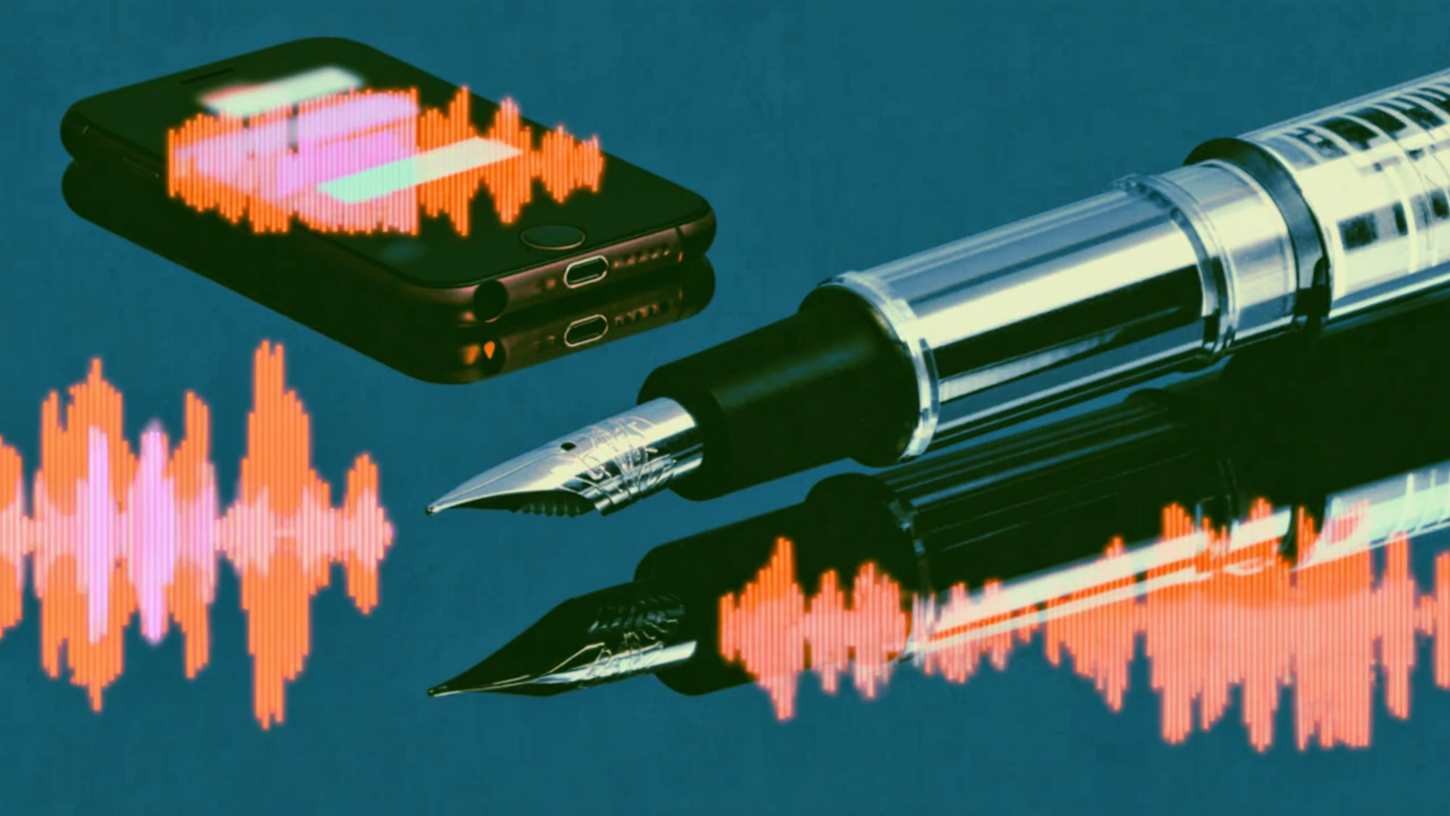
AI hardware has a smartphone problem
Manufacturers have unlocked a simple formula to capitalize on the AI hardware craze: take ordinary items, incorporate microphones, and layer in an AI assistant.
The promise is an AI tool that escapes the traditional screen and accompanies you everywhere. While these products often do that, the issue is that their main features are often duplicative, overlooking the fact that AI assistants are in a device that's always with you. On your phone, you already have a voice recorder that, when combined with an arsenal of apps that can transcribe, analyze, and answer questions, can already deliver what most of these AI devices do.
A perfect example is a product I recently tried called the Flowtica Scribe, which calls itself "the world's first AI pen." If you are like my roommate and excitedly assumed an AI pen would do something groundbreaking, like digitally transcribe the words you write with it on paper, you may have the same reaction he did when finding out what it actually does.
"That's it?" he asked.
The Scribe pen was designed to record audio within a 16-foot range with just a two-second press on the top of the pen. It transcribes the audio, provides summaries, answers questions about the conversations, and showcases the highlights or action items.
It's a perfectly capable product. When I used it to document the process of booking flights with my boyfriend, the transcript was accurate, even though the cafe was loud and I kept shifting the pen away from us to see if it could still hear our conversation. The summary graphic was so detailed that it remembered bits I hadn't even remembered, such as where our layover was, and presented it all in a digestible format. The more in-depth summary was accurate as well.
But it'll cost you. The Flowtica Scribe retails for $159, or $209 for the Scribe and charging case, which offers up to one full week of battery life. There is also a basic AI plan that includes 300 AI minutes per month for all advanced features, with tiered plans for additional AI access at $10 or $20 per month.
This highlights one of the biggest pitfalls of this category: the product comes at a surprisingly high cost for what it is because the hardware itself includes complex components, such as tiny processors and microphones. Plus, users typically have to shell out extra money for a subscription.
Last week, Plaud unveiled its Plaud One AI-powered wireless earbuds, which record and transcribe audio, including phone calls, online meetings, and in-person conversations. The Plaud Agent is meant to "help turn conversations into useful output."
The Plaud charging case includes an eSIM that has a wireless connection to bypass a phone. Again, I can't think of a situation where I would have earbuds and not my phone or laptop. And it costs $249, a price tag that rivals high-end ear buds like the AirPods Pro.
Our Deeper View
My concern is that this entire category of AI devices is watering down and muddying the definition of an AI product. Ultimately, AI is behind the scenes powering features small and large on most tech products. For instance, washing machines have used load-sensing and fabric-detection algorithms since the 2000s. By today's standards, would this make those AI products? I've been a fan of the AI hardware category since smart glasses were the only entrant. Smart glasses give AI context about the world around you, so you're not stuck feeding it that context yourself. Audio products technically do this, but audio is already easy to feed AI without extra hardware. Visual context is a harder problem. Short of holding up your phone in your line of sight at all times, there's no easy way to capture it. Solving this removes a genuine point of friction and lets you tap into AI in a far deeper way. That's the kind of thing we need out of AI devices: something you can't easily do with your phone.
or get it straight to your inbox, for free!
Get our free, daily newsletter that makes you smarter about AI. Read by 750,000+ from Google, Meta, Microsoft, a16z and more.