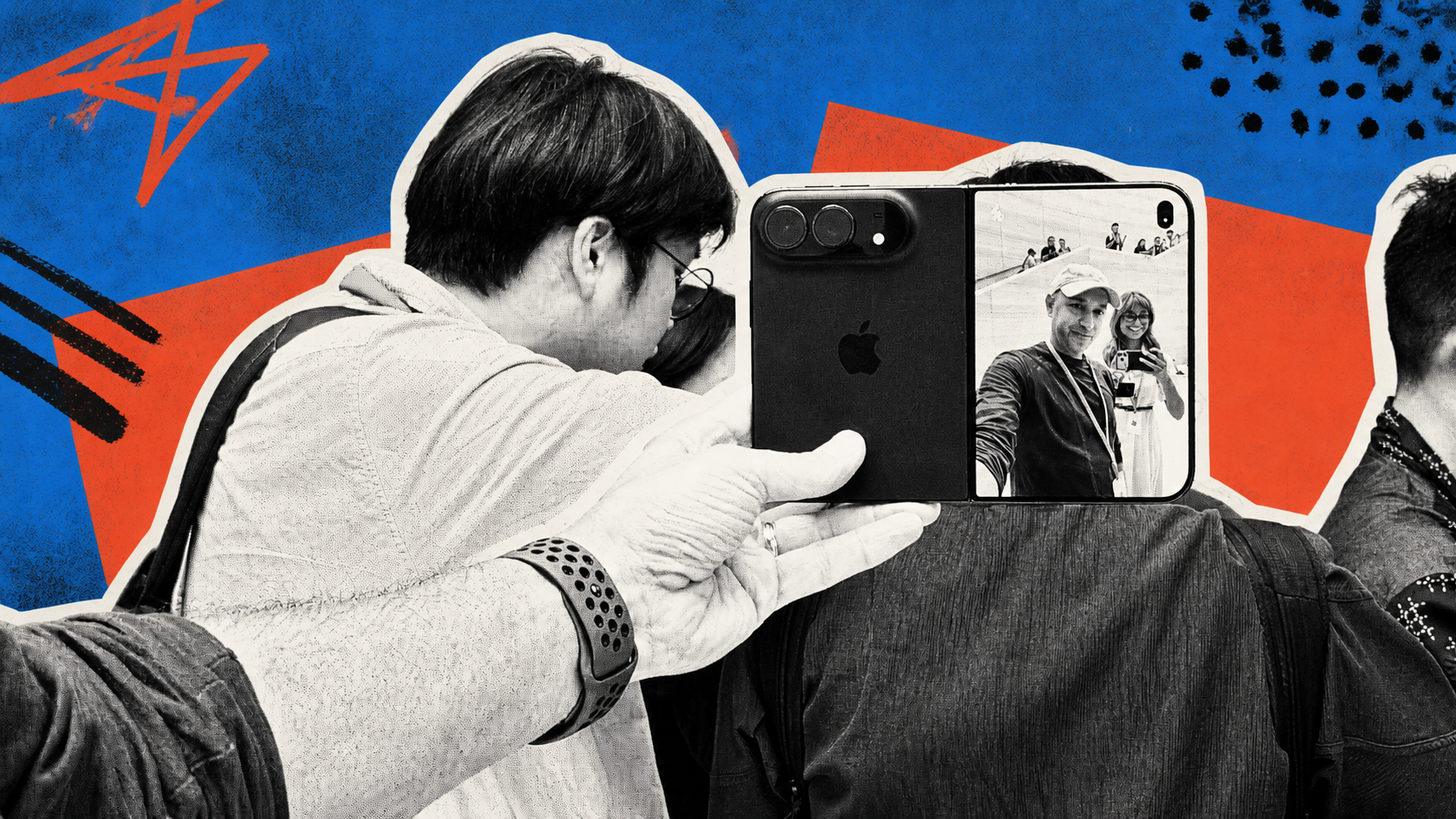
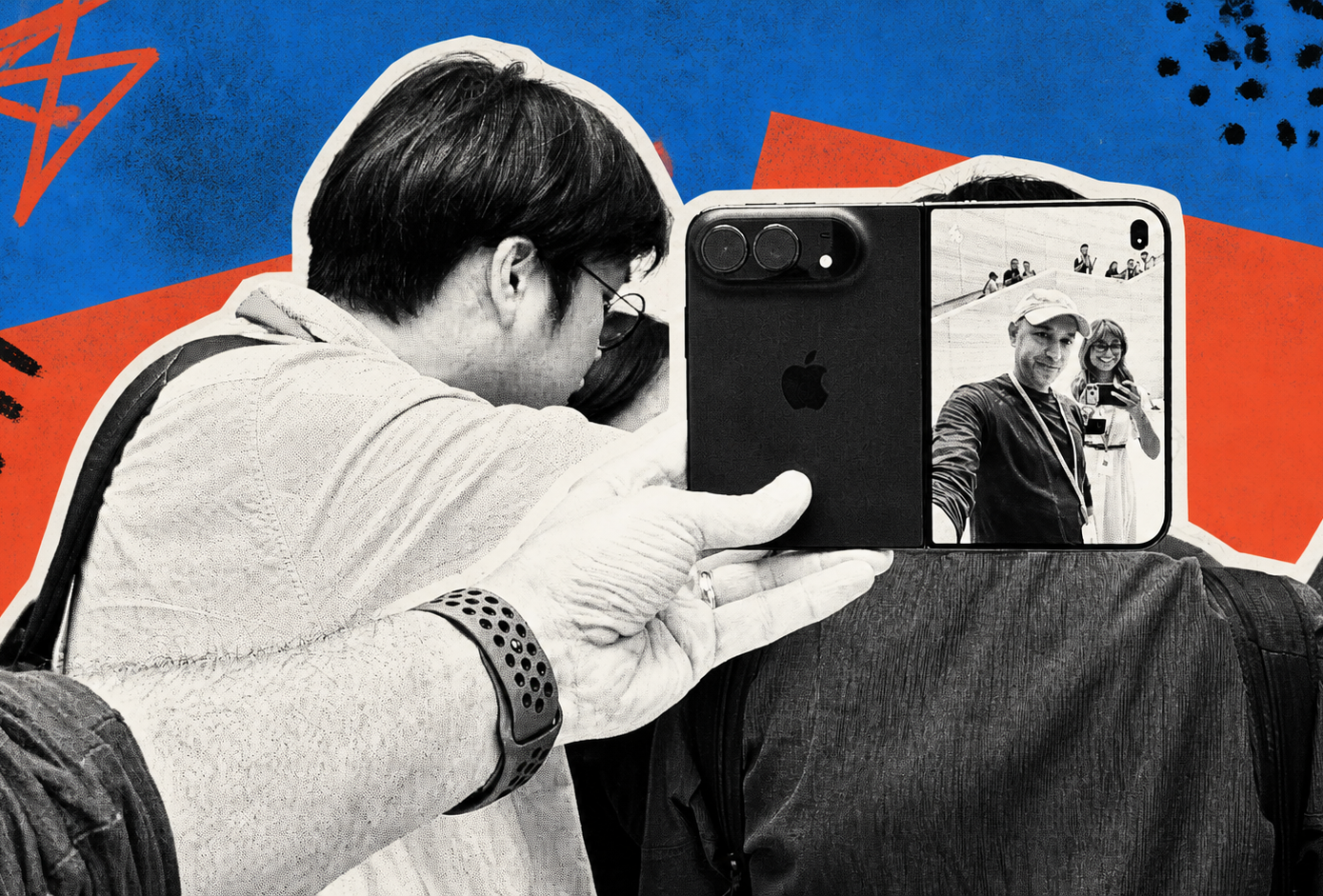
hink of the iPhone Duo less as Apple's take on a foldable phone and more as Apple's vision for the phone of the future.
On Tuesday, the company unveiled the iPhone 18 Pro and Pro Max, the Apple Watch Series 12 and Ultra 4, and the AirPods 5. But then it trotted out one more thing: the iPhone Duo, its long-anticipated folding phone to compete with folding devices from Samsung, Google, Huawei and others. But this isn't just a catch-up move or a me-too play. Instead, I'd characterize this as Apple taking a big swing at reimagining the world's most popular consumer product. And as I've said about the Google Pixel 11 Pro Fold, a foldable iPhone is also the best iPhone for AI.
At the launch event at Apple Park, I got the chance to go hands-on with the iPhone Duo, and I was able to verify the two things that stood out the most during the demo:
- How smooth it moves between phone and tablet modes: This is arguably the most polished aspect of the device and the area where it's already a step ahead of every other foldable I've seen. It moves between closed, open, landscape, and portrait modes so quickly and seamlessly that it feels very natural, and it lets you simply flip to the screen size and orientation that work best for whatever you're doing at the moment.
- The iPhone Duo's unique software options: This thing already has so many tailored integrations that take advantage of the form factor; it's evidence that Apple has been working on this for a long time and has put a lot of thought into making it useful. It has modes for watching video, serving as an alarm clock on your nightstand via StandBy, viewing both participants and content during Zoom calls, using it as a tripod for taking pictures, and much more.
"We started with the experience that we wanted for ourselves: a larger display that feels as natural and intuitive as iPad. Then we brought together thoughtful design with breakthrough engineering," said Apple CEO John Ternus during the product introduction. "The result is a series of remarkable innovations that we believe will redefine the experience of using a foldable phone."
In the demo area after the event, I asked Greg Joswiak, Apple's senior vice president of marketing, about how much intentionality Apple had clearly put into making a foldable. Joswiak said it's because Apple doesn't see itself as a hardware company but as a product company, and he reminded me of the famous quote from Steve Jobs about Apple making "the whole widget" and taking full responsibility for the user experience.
Our Deeper View
Not everyone will look at a foldable and see their phone of the future. For years, I've been testing foldable phones and landing on one conclusion: they felt like a solution looking for a problem. But that changed over the past year. Last summer, I tried the Samsung Fold 7 and was blown away by how impossibly thin the hardware was and how it was essentially a normal phone when closed and an iPad Mini when opened. This year's Google Pixel 11 Pro Fold was similar, only it had better software that made it a lot more useful for AI enthusiasts. The iPhone Duo is another big step forward for foldables, and it suddenly brings the future of the smartphone much more clearly into focus. The Duo reminds us that everything is better on a bigger screen: running chatbots, monitoring agents, typing, opening documents, looking at photos, watching videos, being in virtual meetings, everything. And if the current phone you have in your pocket could be both an iPhone and an iPad, most people would probably want that—especially if they didn't have to pay a huge premium to get it. So, just as the Samsung Galaxy Note and the iPhone 6 Plus, were specialty products when they were first released, and then nearly every phone looked like them 3-5 years later, I think every phone looks like the Galaxy Fold 8 and the iPhone Duo 3-5 years from now. The Duo starts at $1,999 today and won't be released until October 23, so I wouldn't necessarily recommend buying one today (it doesn't even have the best iPhone camera system yet). But keep your eye on it as it improves and drops in price in the next few years.